
PIV Extravasation
Extravasation of a peripheral intravenous (PIV) catheter can happen when fluid or medicine leaks out of the vein into surrounding tissue. This may cause swelling, pain, or tissue damage.
This can happen if:
- The PIV gets clogged.
- The PIV comes out of the vein.
- The vein becomes injured or irritated.
Most extravasations heal without long-term issues.
Normal
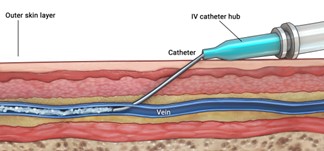
Extravasation
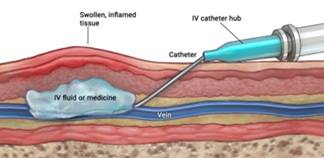
Signs and Symptoms
While you are in the hospital, call the nurse if you see any of these signs or symptoms
of extravasation:
- Swollen, puffy skin
- Redness, pain at or near the PIV site
- Lighter or darker skin around the PIV site
- Warmer or cooler skin around the PIV site
Treatment
- It’s important that an extravasation is seen as soon as possible. Some may be worse than others and cause injury. The medical team will decide the best treatment for your child.
- If your child’s PIV develops an extravasation, the PIV will be removed. The site will be evaluated by trained medical professionals. They will inspect it, check pulses, and measure swelling. They may take pictures of the site to track progress.
- Treatment of basic extravasation cases may include:
- Raising (elevating) the site to reduce swelling.
- Warm or cold compresses, depending on the type of fluid or medicine involved.
- Applying medical pastes or gels to the affected area.
- Sometimes medicines may need to be injected under the skin to reduce or prevent further injury. The number of injections will depend on how bad the extravasation site is.
- Extravasation sites that open up may need a special dressing. Open injuries take time to heal. The team will watch your child closely to recommend other treatments if needed.
- In some cases, stretching or splints may be needed to help with movement.
- Your medical team may decide that you may need follow-up from Plastic Surgery or Orthopedic Surgery.
When to Call After Discharge
- EMERGENCY: Go to the emergency department (ED) RIGHT AWAY if your child’s hand, foot, fingers, or toes below the injured site won’t move or get hard or numb.
- NON-EMERGENCY: Call your child’s doctor or health care provider if the site:
- Swelling increases
- Has skin that starts opening up
- Pain that increases
- Develops new blisters
- Darker or deepened color that gets larger
Helping Hands™ Patient Education Materials
Helping Hands™ are easy-to-read guides about different illnesses, therapies, surgeries, and more. They’re created by the Patient Education team at Nationwide Children’s Hospital and are reviewed and approved by clinical staff, like nurses, doctors, pharmacists, and psychologists. Nationwide Children's Hospital is not responsible for misuse of information in patient education materials, including Helping Hands.
HH-II-279 | ©2026, Nationwide Children’s Hospital