
Chlamydia Expedited Partner Therapy

Your partner was diagnosed with chlamydia (kla-MID-ee-ah), a sexually transmitted infection (STI), and was treated for this infection. You may also be infected and should be treated. This infection is serious but can be cured with antibiotics.
Your partner will give you a prescription for doxycycline (daak-suh-sai-kleen) to treat this infection. It is best for you to see a health care provider even if you took the medicine. Please read all information in this handout before taking the medicine.
How Chlamydia Spreads
- Vaginal sex
- Oral sex
- Anal sex
- Contact between genitals
- Contact between genital fluids and eyes
- During vaginal delivery from an infected mother to baby
- Chlamydia can cause eye infections or pneumonia in newborns
Signs and Symptoms
Chlamydia can be in the body with no symptoms.
Possible symptoms are:
- Burning when you urinate (pee)
- Discharge from genitals
- Male at birth – fever, swollen scrotum or pain around the bladder, groin, or rectum
- Female at birth – fever, chills, vomiting, unusual menstrual bleeding, pain with sex, or pain in the
Testing
After your antibiotic treatment (see below), your provider may recommend testing for chlamydia (Picture 1). Testing may include one or all of the following options, depending on your symptoms: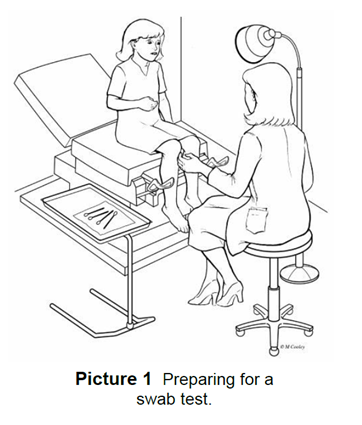
- Urine test
- Vaginal swab
- Rectal swab
Treatment: Doxycycline
Doxycycline is an antibiotic medicine. It keeps
the germ that causes chlamydia from growing.
- Your prescription can be filled at
any pharmacy. - Take this medicine with food and a full
glass of water. - If you vomit the medicine within 30 minutes
of taking it, call your provider. You may need another dose. - Avoid too much sunlight or tanning beds. They can cause skin irritation.
- Wait for 1 week after you and your partner(s) are treated before having sex. During the first 7 days, you can still spread the infection.
- People can have more than one infection at the same time. Doxycycline will not cure other infections.
- DO NOT TAKE if you:
- Think you might be pregnant or you are breastfeeding. Talk with your health care provider before taking this medicine.
- Have a serious long-term illness, such as kidney, heart or liver disease.
- You are allergic to doxycycline. Tell your provider about your allergy symptoms like:
- Hives
- Shortness of breath
- Itching
- Swelling of the face, lips, tongue, or throat
Common Doxycycline Side Effects
- Stomach pain
- Nausea or vomiting
- Diarrhea
Preventing Future Infection
Abstinence (not having sex) is the best way to avoid other STIs and HIV. If you do have sex, these things can help prevent the spread of STIs.
- Limit your number of sexual partners. Know your partner(s) and their sexual history.
- Use a condom every time you have sex, the whole time you have sex.
- Have an extra condom with you in case the one you are using breaks.
- You need to get tested for other STIs and HIV. Having chlamydia can increase your risk of these other infections.
When to Call the Health Care Provider
Call your provider right away if you have any of these symptoms:
- Skin Rash
- Fatigue
- Nausea or vomiting
- Dark colored urine
- Jaundice (yellow skin and eyes)
- Upper abdimen pain on the rught side
When to Call 911
Call 911 for emergency help if you have any of these signs of an allergic reaction to doxycycline like:
- shortness of breath
- swelling of the face, lips, tongue, or throat
Follow-up
- You and your partner(s) must be treated and have a follow-up visit if the symptoms do not go away.
- Come back for ALL follow-up appointments.
- Get re-tested in 3 months. People who are infected with chlamydia once are more likely to get it again.
More information
If you have any questions, call the Adolescent Medicine Clinic at (614) 722-2450. You can also call the National STD Hotline at 1 (800) 232-4636, 8 a.m. to 11 p.m., Monday through Friday, or you can get information at http://www.ashastd.org
HH-IV-163 ©1985, Revised 2021, Nationwide Children’s Hospital


