
Peripheral Intravenous (PIV) Catheter
A peripheral intravenous catheter (PIV) is a thin, flexible tube (catheter) that is inserted into a vein in the hand, arm, foot, leg, or scalp. It can be called a midline depending on where it ends. PIVs are used to give fluids or medicine directly into the bloodstream. They are taped or secured with a clear dressing. Other devices such as an arm board and tape may be used.
What It’s For
A PIV can be used to give the following directly into a vein:
- Medicines
- Fluids
- Blood or blood products
- Nutritional support
Inserting a PIV
-
To insert a PIV, a tiny plastic tube (catheter) is placed using a needle into a vein in your child’s hand, arm, or foot. This needle is removed once the catheter is in the right place and is never left in the vein.
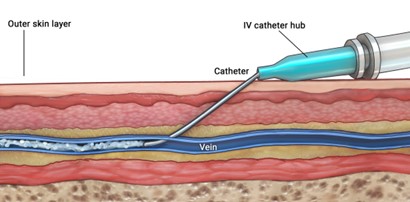
- The catheter is covered with a clear bandage (dressing to keep it in place).
-
The catheter is then attached to a short tube where medicine is given or fluid tubing is attached for IV therapy.
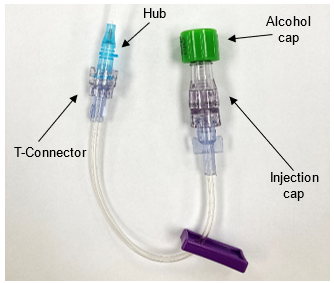
- Your child may be scared to get a PIV. There are things to make this more comfortable for them. There are pain management options and distraction techniques available to help them cope with this procedure. It’s possible that the nurse can’t place the PIV. Another team may come in to help and discuss options.
- Your child should not feel pain when the catheter is in the vein unless it moves. To prevent this, a padded board may be taped under the arm or leg to keep the limb still. This can also keep the PIV from coming out.
- Your child’s PIV should be secured with an IV securement device and clear dressing.
Caring for a PIV
- When your child bathes, do not let the catheter or taped areas get wet. Ask the nurse to show you ways to do this.
- You may need to gently hold your child’s hands at times to keep the PIV from moving.
- Always try to make sure the tubing is not caught, pulled, or blocked. In bed, make sure they are not lying on the tubing. Drape the tubing over the side rail of the bed so that it hangs free.
- If the PIV is in your baby's foot, do not let them stand up.
- If the PIV is in your baby's scalp, do not lay their head on the side where the PIV is.
- Your child can still play, read, and do things they like with a PIV.
- When your child gets in and out of bed or walks around, be sure the tubing is not caught.
- A PIV will be taken out if there are any signs of problems.
Warning
The PIV catheter tubing can get wrapped around a child’s neck. This can lead to choking (strangulation) or death.
- DO NOT leave the PIV catheter tubing where infants or children can get tangled up in it.
- Talk to your child’s health care provider or doctor:
- If your child has been tangled in their tubing before.
- To learn how to help make sure the tubing does not get wrapped around your child’s neck, such as keeping the tubing away from the child as much as possible.
- Any other concerns you may have about the risk of strangulation from IV tubing.
If your child is injured by any tubing, please report the event to the FDA. Your report can provide information that helps improve patient safety. To make a report, click here.
Possible Problems
Your child will likely need another PIV if any of these happen:
- PIV comes out (dislodgement) or stops working (occlusion).
- Extravasation – Fluid or medicine leaks out of the vein into the surrounding tissue. This is sometimes called infiltration.
- Phlebitis – Inflammation of the vein. It can happen when the catheter or medicine irritates the vein.
When to Call the Nurse
Call the nurse if:
- The alarm on the pump goes off.
- Your child pulls or tugs on the tubing.
- You notice blood in the tubing.The tubing pulls apart.
- The tape or the dressing comes loose or looks wet or dirty.
- The PIV site looks red or puffy.
- The site looks wet.
- Your child is complaining that the PIV hurts.
Removing the PIV
When your child no longer needs the PIV, the nurse will remove the tape and take out the catheter. Peeling off the tape will feel like taking off a Band-Aid®. Your child may feel a little pinch when the catheter is pulled out.
- There will be a tiny mark where the PIV was placed and maybe a little bleeding. The nurse will apply pressure to stop the bleeding and may put on a Band-Aid®.
- If a padded board was used to keep the limb still, your child's arm or foot may feel a little stiff. This will get better as your child moves around.
Helping Hands™ Patient Education Materials
Helping Hands™ are easy-to-read guides about different illnesses, therapies, surgeries, and more. They’re created by the Patient Education team at Nationwide Children’s Hospital and are reviewed and approved by clinical staff, like nurses, doctors, pharmacists, and psychologists. Nationwide Children's Hospital is not responsible for misuse of information in patient education materials, including Helping Hands.
HH-II-278 | ©2026| Nationwide Children’s Hospital