
Breuer Lab
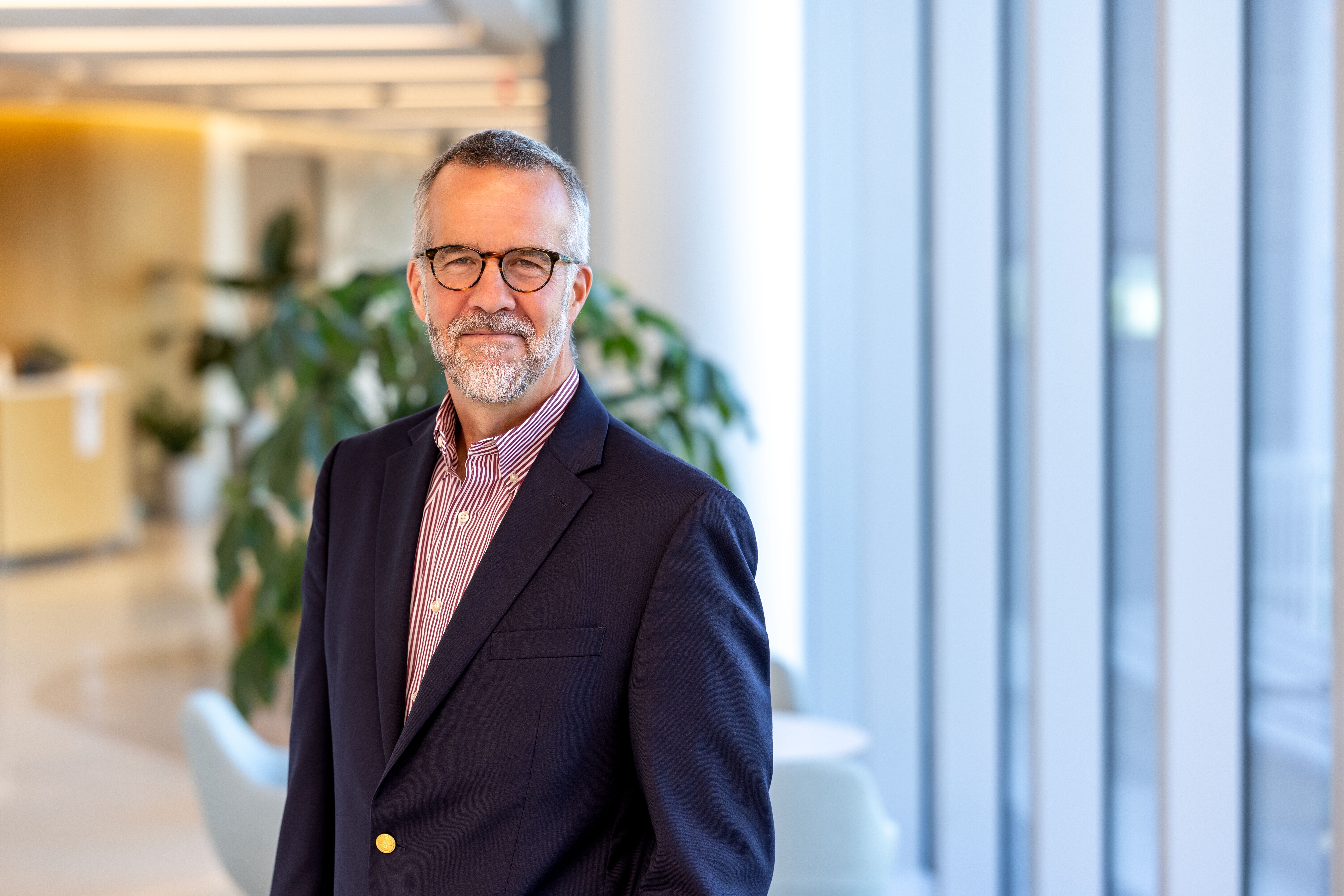
The focus of the Christopher Breuer Lab is to design a tissue engineered vascular graft (TEVG) that can be used during surgery that, over time transitions to a normal blood vessel that will grow with our pediatric patients.
Our goal is to use these TEVGs in surgeries that repair our complex congenital heart patients. And because they transition to a normal blood vessel, they could potentially reduce the number of future surgeries these patients would have due to the graft material not growing.
The process of creating and implanting a TEVG involves placing the scaffold in a vacuum and seeding it with cells obtained from the patient’s bone marrow at the beginning of surgery and then placing the graft.
Over the next six months, the body acts as a bioreactor to grow a new vessel, and the scaffold disintegrates. When they started, they assumed that the cells that were seeded onto the scaffold made the resulting vessel, but surprisingly, they found the host cells were the ones that made the vessel.
Inside Breuer Lab
Featured Publications
- Turner, M. E., Che, J., Leland, J. T., Villarreal, D. J., Rajesh, S., Suravarapu, S., Hor, K. N., Wiet, M. G., Kerlin, B. A., Yi, T., Best, C. A., Reinhardt, J. W., & Breuer, C. K. (2025). Modulating the platelet-mediated innate foreign body response to affect in situ vascular tissue engineering outcomes.NPJ Regenerative medicine, 10(1), 34.
- Blum, K. M., Turner, M. E., Schwarz, E. L., Best, C. A., Kelly, J. M., Yates, A. R., Hor, K. N., Matsuzaki, Y., Drews, J. D., Zakko, J., Shah, K., Shinoka, T., Humphrey, J. D., Marsden, A. L., & Breuer, C. K. (2025). Oversized Conduits Predict Stenosis in Tissue Engineered Vascular Grafts.JACC. Basic to translational science, 10(7), 101248.
- Watanabe, T., Yuhara, S., Leland, J. T., Spiess, J. L., Thodla, A., Ramachandiran, R., Kelly, J. M., Shinoka, T., & Breuer, C. K. (2025). Ectopic Calcification in Congenital Heart Surgery: A Material-Centric Review. Pediatric cardiology, 46(7), 1771–1789.
- Turner, M. E., Villarreal, D. J., Reinhardt, J. W., & Breuer, C. K. (2026). Platelets: the first cellular responders in the foreign body response to blood-contacting biomaterials. Frontiers in immunology, 17, 1758373.
- Guo, M., Watanabe, T., DeShetler, C., Yuhara, S., Kievert, J., Spiess, L., Morrison, A., Nelson, K., Heuer, E., Taha, F., Kelly, J. M., & Breuer, C. K. (2025). Wireless Telemetry Device Implantation in a Fontan Ovine Model for Continuous and Long-Term Hemodynamic Monitoring.Journal of visualized experiments : JoVE, (219), 10.3791/68068.
Featured News
Dr. Breuer's article, "Tissue engineered vascular grafts are resistant to the formation of dystrophic calcification," has been selected by the editors at Nature Communications for their Editors' Highlights of recent research called "Translational and Clinical Research."
Resources for Patients
A Blood Vessel Designed to Grow With a Child | Tissue Engineering Vascular Graft: What if a blood vessel could grow alongside a child? Researchers at Nationwide Children’s are advancing a groundbreaking tissue-engineered vascular graft designed to repair, remodel and grow with pediatric patients, offering new hope for children born with complex heart conditions. Watch how decades of innovation are helping redefine what’s possible in congenital heart care.
Tissue Engineered Vascular Grafts: A Breakthrough for Children With Heart Defects – Pediatrics Nationwide Children with single ventricle disease are often described as having “half a heart.” What this really means is that one of their ventricles (either the right or left lower chamber of the heart) is under-developed, making it challenging for the heart to effectively pump blood through the body. An innovation 30 years in the making is poised to change the way children with single ventricle disease experience life after a Fontan procedure.
Featured Research Projects
The goal is to uncover the precise biological mechanisms by which the body transforms a biodegradable scaffold into a living, functioning blood vessel.
While developing the Tissue-Engineered Vascular Graft (TEVG), Dr. Breuer’s lab made a surprising discovery: it is actually the patient's own host cells—not just the cells originally seeded onto the graft—that drive the creation of the new vessel. This project investigates that process, focusing on how the extracellular matrix deposits and remodels. Understanding this cellular behavior allows the lab to refine TEVGs so they can better grow with pediatric patients, ultimately reducing the need for repeated open-heart surgeries as the child ages.
Funding: National Institutes of Health (NIH) / National Heart, Lung, and Blood Institute (NHLBI).
The goal of this project is to develop a regenerative medicine solution that improves cardiac function and long-term outcomes for pediatric patients with single ventricle heart disease (the Fontan population).
Dr. Breuer serves as Co-Coordinator for this massive initiative, leading a multidisciplinary "team of teams" composed of principal investigators across multiple academic institutions. Now in its three-year "2.0" phase, the collaborative builds on its foundational discoveries by combining basic, translational, and engineering sciences to create novel tissue engineering approaches. The project tackles the complex problem of single ventricle heart disease from all sides, aiming to create tissue-engineered cardiac solutions with vastly better risk-benefit profiles than current standards of care.
Funding: Additional Ventures
The goal is to make the production of TEVGs safer, more automated, and widely accessible by eliminating the need for an expensive "clean room" manufacturing facility.
Currently, creating a TEVG involves manually collecting a patient's bone marrow cells, filtering them, and vacuum-seeding them onto a scaffold within a highly regulated clean room. Because clean rooms are incredibly costly and limit how many hospitals can offer this technology, Dr. Breuer's team is engineering a disposable, closed-loop system. This automated device would allow a technician to inject the bone marrow cells into a closed chamber right in the operating room or blood bank, where the system filters and seeds the graft automatically.
Funding: Pall Corporation


