Center for Childhood Cancer Research
The Center for Childhood Cancer Research (CCCR) at Nationwide Children’s Hospital works to develop more effective, targeted treatments with fewer harmful side effects. We study what makes childhood cancers different and find weaknesses in cancer cells that could lead to better treatments.
Our research brings together fundamental cancer biology, genomics and computational biology, tumor immunology, cellular and gene therapy, preclinical modeling and therapeutic development to study cancer genes, the immune system and ways to use cells and genes to treat cancer. We also use computer tools and laboratory models to understand cancer and test potential treatments. Our strengths include pediatric sarcomas, cancers of bone and soft tissue, and brain and nervous system tumors.
Our investigators work closely with pediatric oncologists and other clinical partners. Together, they use challenges seen in patient care to guide research, connecting laboratory discoveries with the need for better childhood cancer treatments.

The Abigail Wexner Research Institute is ranked among the top 10 for NIH funding among free-standing children's hospitals.
About Center for Childhood Cancer Research
The Center for Childhood Cancer Research (CCCR) at Nationwide Children’s brings together scientists, physician-scientists and clinicians with a shared goal: to understand childhood cancer and use that knowledge to improve the lives of children with cancer.
Childhood cancers are biologically distinct diseases that require approaches designed specifically for them. CCCR investigators study the molecular and cellular mechanisms that initiate and sustain pediatric cancers, how tumors evolve and interact with their surrounding environment, how they respond and adapt to treatment and the vulnerabilities that can provide opportunities for new therapies. The Center has particular strengths in pediatric sarcomas and neuro-oncology, complemented by expertise in cancer genomics and epigenetics, genome regulation and stability, tumor immunology, cell and gene therapy, oncolytic virotherapy, cancer metabolism, metastasis, computational biology and experimental therapeutics.
A major strength of the CCCR is our ability to connect patient tumors with laboratory discovery. Extensive tumor banking and patient-derived resources, including patient-derived xenografts and other preclinical models, provide clinically relevant systems in which to investigate disease biology and evaluate new therapeutic strategies. Advanced genomic, bioinformatic, single-cell and spatial approaches allow us to define the cellular and molecular complexity of childhood cancers and identify biological states associated with treatment response, resistance and disease progression.
Translation is integral to our research. Our close connection with pediatric oncologists and other clinical partners at Nationwide Children’s allows important clinical problems and observations from patients to inform research in the laboratory. In turn, discoveries can be investigated mechanistically, evaluated using patient-derived and other clinically relevant models, and developed toward new therapeutic strategies. This bidirectional relationship between laboratory and clinic is central to our approach.
Collaboration makes this possible. CCCR investigators bring together expertise across laboratory, computational, translational and clinical disciplines and work with colleagues throughout Nationwide Children’s, the Abigail Wexner Research Institute and The Ohio State University. We also develop national and international partnerships that bring additional expertise, technologies and perspectives to challenging problems in childhood cancer.
Mission
Our mission is to discover the mechanisms that drive childhood cancers and translate that knowledge into more effective, precise and less toxic treatments, while educating and developing the next generation of childhood cancer researchers.
Vision
Our vision is a future in which every child with cancer benefits from therapies informed by the unique biology of their disease.
Training the Next Generation
Training the next generation of researchers is an important part of the CCCR mission. We provide research opportunities across the career continuum, from undergraduate researchers through PhD and MD/PhD students to postdoctoral fellows, within a highly collaborative pediatric cancer research environment.
Trainees work alongside basic, computational, translational and clinical researchers and have opportunities to learn across disciplines. Training includes scientific mentorship, opportunities to present and discuss research, exposure to visiting scientists, and professional and career development. Dedicated support includes the NCI-funded Training Program in Basic and Translational Pediatric Oncology Research (T32) and opportunities supported by Pelotonia Kids, alongside other institutional and externally funded fellowships and training programs. The current Center includes substantial communities of graduate students and postdoctoral fellows, and recent trainees have progressed to academic research, medicine, biotechnology and other scientific careers.
Our goal is not simply to train researchers in particular techniques, but to develop scientists who can ask important questions, work across disciplinary boundaries, collaborate effectively and lead the next generation of discoveries in childhood cancer.
Our Values
We aim to make a difference for children with cancer. That commitment shapes the questions we ask, the collaborations we build and how we evaluate the significance of our work.
We believe in research that is:
- Clinically informed and focused on impact. The challenges faced by children with cancer help inform our scientific priorities, and we seek opportunities to move discoveries toward meaningful improvements in treatment.
- Rigorous and innovative. We pursue fundamental questions with scientific rigor while embracing new technologies, models and approaches that allow us to ask questions in new ways.
- Collaborative. Complex problems in childhood cancer rarely fall within a single discipline. We bring together laboratory scientists, computational researchers, physician-scientists and clinicians and build partnerships beyond the Center when additional expertise can accelerate progress.
- Generous with knowledge and resources. We value the development and sharing of models, data, technologies and expertise that enable discoveries beyond an individual laboratory.
- Committed to the next generation. We invest in mentorship, education and opportunities for trainees and early-career investigators and encourage them to develop their own ideas and scientific identities.
Our measure of success is not discovery alone, but our ability to turn discovery into knowledge, strategies and ultimately treatments that improve the lives of children with cancer.
Connect With Us
Collaboration
Collaboration is central to how we approach childhood cancer research. The Center for Childhood Cancer Research brings together experts, technology and research tools to tackle challenges in childhood cancer that require a team approach.
We welcome opportunities to collaborate with investigators and clinicians across Nationwide Children’s and The Ohio State University, as well as with academic, clinical and other research partners nationally and internationally. Areas of potential collaboration include:
- pediatric sarcoma and neuro-oncology
- tumor immunology and cell and gene therapy
- cancer genomics and bioinformatics
- single-cell and spatial biology
- patient-derived tumor models
- preclinical therapeutic testing
- the translation of laboratory discoveries toward clinical application.
Collaborations may begin with a shared scientific question, access to specialized expertise or research models, analysis of patient samples or complex datasets, development and testing of therapeutic approaches or opportunities to build multidisciplinary grant and research programs.
Investigators interested in collaborating with the CCCR are encouraged to contact the Center. We can help identify investigators, expertise and resources that best align with the proposed research and facilitate connections across the Center and our institutional partners.
Contact Us
Email Alex.Bishop@NationwideChildrens.org
Join Our Team
The Center for Childhood Cancer Research is building a collaborative, multidisciplinary community of scientists committed to understanding childhood cancer and translating discoveries into better treatments for children.
We welcome researchers at all career stages who want to contribute to that mission. Opportunities within the CCCR include faculty positions, postdoctoral fellowships, research staff positions, graduate and MD/PhD research opportunities and undergraduate research experiences.
CCCR members work within the broader research environment of Nationwide Children’s, the Abigail Wexner Research Institute and The Ohio State University, providing opportunities to collaborate across basic, computational, translational and clinical disciplines. Researchers have access to advanced technologies, patient-derived samples and models, bioinformatic and genomic expertise and a pediatric healthcare environment that helps connect laboratory research with clinically important questions.
Faculty Opportunities
The CCCR is actively growing its research programs and recruits investigators whose expertise complements and expands the scientific strengths of the Center. Current and future faculty recruitment areas include pediatric neuro-oncology, cell and gene therapy, patient-derived and organoid models and other areas of childhood cancer biology and therapeutic development.
Postdoctoral and Research Staff Opportunities
CCCR laboratories recruit postdoctoral fellows, research scientists, research associates and other research staff across a broad range of basic, computational and translational pediatric cancer research programs.
Because individual laboratory opportunities change frequently, prospective postdoctoral fellows are also encouraged to contact CCCR investigators directly whose research aligns with their interests.
Student Opportunities
Graduate and MD/PhD students can conduct research with CCCR faculty through participating graduate programs at The Ohio State University. Undergraduate research opportunities are also available in selected CCCR laboratories and through institutional training programs.
Current Openings
Current faculty, postdoctoral, research staff and other employment opportunities are available through Nationwide Children’s Careers.
Inside our Zebrafish Facility: Genetic, Life-Saving Research
The Abigail Wexner Research Institute at Nationwide Children’s Hospital is home to our cutting-edge Zebrafish Facility. These tiny fish are used in multiple disciplines in thousands of laboratories around the world. Because Zebrafish are similar to humans, our researchers are able to use the system to study processes that are difficult or impossible to follow in other animals. The level of expertise and the state-of-the-art facility set us apart in this field. This research will bring hope to families and will help better treat children with life-threatening conditions and diseases. Come inside our facility and learn more about this genetic, life-saving research.
Meet Our Team
The Center for Childhood Cancer Research is built around a collaborative model of scientific leadership, bringing together investigators with expertise in cancer biology, genomics and bioinformatics, tumor immunology, cell and gene therapy, preclinical modeling and therapeutic development. Faculty collaborate across research programs and work closely with clinical colleagues at Nationwide Children’s to address important problems in childhood cancer.
The center’s leadership works to create an environment in which these interactions can flourish. We advance childhood cancer research by investing in shared tools and models, connecting experts, turning discoveries into potential treatments, recruiting scientists and supporting researchers through training and mentorship.
Scientific interaction is an important part of this environment. Regular research seminars, invited speakers, working groups, grant-development activities and Center-wide events provide opportunities for faculty and trainees to exchange ideas, develop collaborations and pursue new research directions. The Center also works to build connections across the Abigail Wexner Research Institute, Nationwide Children’s and The Ohio State University and with research partners nationally and internationally.
Leadership
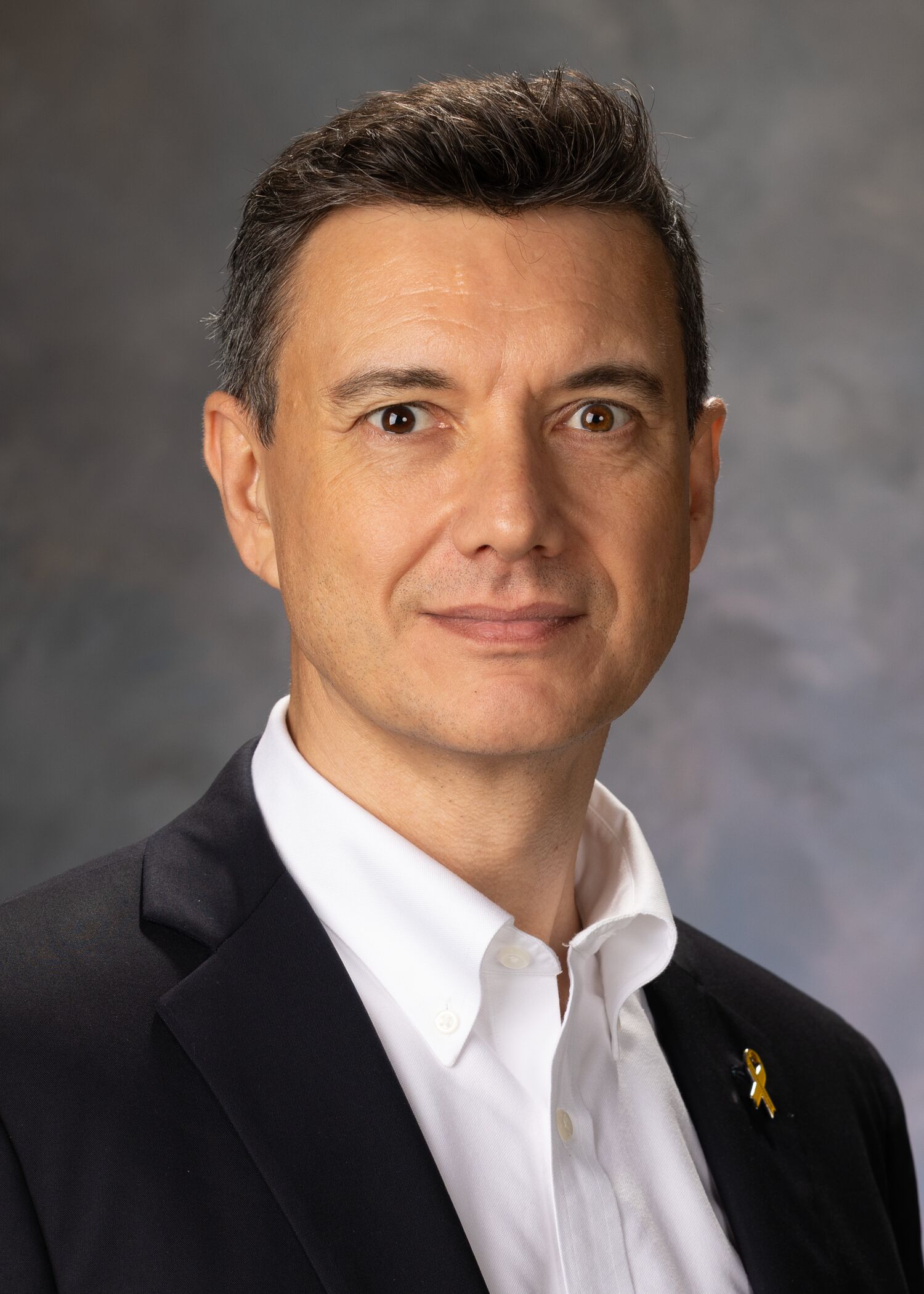
Alexander J. R. Bishop, DPhil
Director, Center for Childhood Cancer Research
Alexander J. R. Bishop, DPhil, is director of the Center for Childhood Cancer Research and professor of Pediatrics at The Ohio State University. He trained in molecular genetics and DNA repair at the University of Oxford in the United Kingdom and subsequently at Harvard Medical School before establishing his independent research program in cancer biology. Before joining Nationwide Children’s, he was a faculty member at UT Health San Antonio.
Dr. Bishop’s research program has been continuously supported by federal funding from the National Institutes of Health and Department of Defense, together with major foundation and collaborative research support, including Stand Up To Cancer (SU2C). Throughout his career, he has worked across traditional scientific and institutional boundaries and has led collaborative research teams involving investigators in the United States and internationally.
A major focus of Dr. Bishop’s research is Ewing sarcoma, an aggressive cancer of the bone and surrounding soft tissues that primarily affects children, adolescents and young adults. His laboratory studies how the genetic changes that cause Ewing sarcoma disrupt fundamental processes within cancer cells, including gene regulation, DNA repair and genome stability. By understanding how these changes create vulnerabilities in tumor cells, his team aims to identify new opportunities for treatment.
His broader research examines how cells respond and adapt to genomic, transcriptional and metabolic stress and how these responses influence cancer development and treatment. His work combines molecular and cellular biology with genomic, computational and preclinical approaches to move from fundamental mechanisms toward therapeutic opportunities.
Dr. Bishop’s long history of collaborative science shapes his approach to leading the CCCR. He works to create connections among investigators within the Center and across the Abigail Wexner Research Institute, Nationwide Children’s and The Ohio State University, while developing partnerships with researchers nationally and internationally. His goal is to create an environment in which complementary expertise, ideas and resources come together to address problems in childhood cancer that no single laboratory could solve alone.
Dr. Bishop is also deeply committed to mentorship and to developing the next generation of cancer researchers, from undergraduate and graduate students through postdoctoral fellows and early-career investigators.
News & Events
Publications
CCCR investigators publish research spanning fundamental mechanisms of cancer biology through preclinical and clinical translation. Major areas include pediatric sarcomas and brain tumors, cancer genomics and epigenetics, tumor evolution and metastasis, tumor immunology, cell and gene therapy, oncolytic virotherapy, metabolism and therapeutic development.
Recent research highlights include:
- Clinical translation in Ewing sarcoma: A phase 1/2 clinical trial evaluating trabectedin and low-dose irinotecan as an approach to therapeutically target the EWS::FLI1 oncogenic driver in Ewing sarcoma. Nature Medicine, 2026.
- Precision medicine in osteosarcoma: Development of an international framework for translating molecular classifiers into clinical approaches for patients with osteosarcoma. NPJ Precision Oncology, 2026.
- Single-cell and spatial genomics: Single-cell and spatial analysis revealing region-specific cellular plasticity and potential therapeutic vulnerabilities in metastatic high-risk neuroblastoma. Science Advances, 2026.
- Immunotherapeutic targets in osteosarcoma: Surface and global proteomic approaches identifying ROR2 and other potentially actionable immunotherapy targets in osteosarcoma. Cell Reports, 2026.
- Ewing sarcoma biology and therapeutic vulnerabilities: Identification of retroelement-driven inflammatory signaling in Ewing sarcoma and its potential targeting with reverse transcriptase inhibitors. Cell Reports, 2026.
- Genome stability and cancer biology: Definition of mechanisms through which the SETX-BRCA1-BARD1 complex resolves R-loops and transcription-replication conflicts. Nature Structural & Molecular Biology, 2026.
- Fusion-positive rhabdomyosarcoma: Identification of transcriptional regulation of MIR17HG by PAX3::FOXO1 and MYCN and its requirement for oncogenic activity. Molecular Cancer Research, 2026.
- Oncolytic virotherapy: Clinical evaluation of the oncolytic virus VV1 alone and in combination with immune checkpoint therapy in patients with relapsed or refractory solid tumors. Cancer Research Communications, 2026.
The center has a strong and sustained record of publication in leading biomedical and cancer research journals, including Nature, Nature Medicine, Nature Communications, Science Advances, Cancer Research, Journal of Clinical Oncology, Blood, Molecular Therapy and others.
News
Research advances, new funding, awards and the accomplishments of our faculty and trainees reflect the breadth and momentum of research across the Center for Childhood Cancer Research.
Research and Translation
CCCR research extends from fundamental biological discovery to new therapeutic approaches and clinical investigation. Recent work includes clinical testing of therapeutic strategies originating from pediatric cancer research, development of patient-derived and preclinical models, identification of new therapeutic vulnerabilities and the application of single-cell, spatial, genomic and computational approaches to understand childhood cancers.
Research Funding
CCCR investigators are supported by substantial peer-reviewed funding from the National Institutes of Health and National Cancer Institute, Department of Defense, American Cancer Society, Alex’s Lemonade Stand Foundation, St. Baldrick’s Foundation, CancerFree KIDS, Hyundai Hope on Wheels, Osteosarcoma Institute, National Pediatric Cancer Foundation and other federal, foundation and industry partners. Current major awards support research in neuroblastoma, Ewing sarcoma, osteosarcoma, rhabdomyosarcoma, pediatric brain tumors, tumor immunology, cellular therapy and oncolytic virotherapy.
Faculty and Trainee Accomplishments
CCCR faculty and trainees regularly receive national research awards, fellowships and recognition for their work. Recent accomplishments include new NIH and foundation research awards, faculty promotions, competitive postdoctoral and graduate fellowships, trainee awards, successful PhD defenses and progression of CCCR trainees to academic, medical and biotechnology careers.
Researcher Spotlights
Our researchers are at the heart of the CCCR. Researcher Spotlights introduce faculty, postdoctoral fellows, graduate students and research staff, highlighting the science they pursue, what brought them to childhood cancer research and the people behind the discoveries.
Community and Partnerships
CCCR faculty, staff and trainees engage with organizations committed to improving outcomes for children with cancer, including Pelotonia Kids, CancerFree KIDS, St. Baldrick’s Foundation and other community and philanthropic partners. Center members participate in fundraising, education and community events that connect childhood cancer researchers with patients, families and supporters.
Events
Scientific exchange and collaboration are central to the CCCR. The center maintains an active program of internal research seminars, educational seminars, visiting speakers and center-wide scientific and community events.
CCCR Trainee and Research Staff Seminar Series
The CCCR hosts a weekly research seminar series that provides graduate students, postdoctoral fellows, research staff and other trainees with opportunities to present their research to the center. Presentations span CCCR laboratories and research disciplines, exposing trainees to diverse areas of childhood cancer research while encouraging scientific discussion, feedback and collaboration.
The 2027 program includes presenters from laboratories across the center working in pediatric sarcomas, brain tumors, tumor immunology and cellular therapy, cancer metabolism, genomics and epigenetics, bioinformatics and therapeutic development.
NCI T32 Pediatric Oncology Seminar Series
As part of the NCI-supported Training Program in Basic and Translational Pediatric Oncology Research, the CCCR hosts dedicated educational seminars addressing major areas of pediatric cancer biology and translational research.
The 2027 T32 program includes seminars on:
- Cancer Genomics, Elaine Mardis, PhD
- Key Features of Sarcoma Pathologies, Sonja Chen, MBBS
- Cancer Metabolism, Ruoning Wang, PhD
- Altered Splicing in Cancer, Dawn Chandler
- Developmental Pathways in Rhabdomyosarcoma, Genevieve Kendall, PhD
- Fusion Gene Drivers in Ewing Sarcoma, Emily Theisen, PhD
- Mechanisms of Metastasis, Ryan Roberts, MD, PhD
- Early Phase Clinical Trials, Keri Streby, MD
These seminars complement laboratory training by exposing trainees to fundamental, translational and clinical perspectives across pediatric oncology.
CCCR Invited Speaker Series
The CCCR Invited Speaker Series brings leading scientists from institutions across the United States and internationally to Nationwide Children’s to share emerging research and interact with CCCR faculty and trainees. Visiting speakers provide opportunities for scientific exchange, development of new collaborations and exposure of trainees to leaders across cancer and biomedical research.
Confirmed 2027 speakers include:
- David Libich, University of Texas Health Science Center at San Antonio, May 4
- Kevin B. Jones, University of Utah, June 1
- Mariella G. Filbin, Dana-Farber Cancer Institute/Harvard Medical School, October 5
Additional external speakers will be added throughout the year.
Discovery Seminars
CCCR investigators also participate in and host selected Discovery Seminars featuring internationally recognized biomedical researchers. Confirmed 2027 speakers include David Malkin, Professor of Pediatrics and Medical Biophysics at The Hospital for Sick Children and University of Toronto, hosted by Dr. Kendall on May 13.
Center Events
The CCCR hosts additional activities that bring our research community together, including the annual CCCR Research Retreat, scientific workshops, trainee and career-development activities, and events with community and philanthropic partners. These activities create opportunities to share science, develop collaborations and strengthen connections among faculty, trainees, staff, clinicians and the broader childhood cancer community.
For Trainees
Training and Career Opportunities
The Center for Childhood Cancer Research is committed to educating and developing the next generation of scientists working to understand and treat childhood cancer. We provide research and training opportunities across the career continuum. This includes undergraduate researchers, PhD and MD/PhD students, clinical fellows, postdoctoral fellows and other early-career researchers.
Trainees work with investigators studying fundamental cancer biology, genomics and bioinformatics, tumor immunology, cell and gene therapy, preclinical modeling and therapeutic development, with opportunities to participate in research spanning mechanistic discovery through clinical translation. The collaborative environment of the CCCR, Nationwide Children’s and The Ohio State University provides access to investigators, technologies and expertise across scientific and clinical disciplines.
Training extends beyond individual laboratories. CCCR trainees participate in research seminars, invited-speaker programs, scientific working groups and other Center activities that provide opportunities to present their research, receive feedback, learn from investigators in other disciplines and develop new collaborations. The Center also emphasizes mentorship and professional development to help trainees prepare for careers in academic research, medicine, biotechnology, industry and other areas of biomedical science.
Graduate and MD/PhD Training
CCCR faculty participate in graduate programs at The Ohio State University, providing opportunities for PhD and MD/PhD students to conduct dissertation research in Center laboratories. Students have access to the broader scientific and educational resources of both Ohio State and Nationwide Children’s while conducting research in an environment focused on childhood cancer biology and translation.
Graduate students are integrated into the scientific life of the Center and have opportunities to present their research, interact with visiting scientists and collaborate across laboratories and disciplines.
NCI T32 Training in Pediatric Oncology
The CCCR is home to an NCI-funded Training Program in Basic and Translational Pediatric Oncology Research (T32) supporting the development of graduate students and postdoctoral fellows pursuing careers in pediatric cancer research. The program combines mentored research with specialized education across fundamental, translational and clinical pediatric oncology.
The dedicated T32 seminar program exposes trainees to areas including cancer genomics, cancer metabolism, sarcoma pathology, developmental biology, fusion-driven cancers, metastasis and early-phase clinical trials, illustrating the breadth of training available within the pediatric cancer research environment.
Postdoctoral Training
Postdoctoral fellows are an important part of the CCCR research community. Fellows receive individualized scientific mentorship while participating in the broader intellectual environment of the Center, including seminars, visiting-speaker interactions, collaborative research and professional-development opportunities.
Postdoctoral researchers are encouraged to develop scientific independence, establish collaborations and pursue competitive fellowship and career-development funding. CCCR trainees have received support through institutional programs and national organizations, including the NCI T32 and American Cancer Society.
Undergraduate Research
CCCR laboratories provide opportunities for undergraduate students to gain meaningful, hands-on experience in biomedical research while working alongside faculty, graduate students, postdoctoral fellows and research staff.
Students can become involved in ongoing research projects while learning how scientific questions are developed and investigated. These experiences provide mentorship for students considering graduate, medical or other biomedical careers and can provide opportunities to develop increasingly independent research projects.
Undergraduate research and training opportunities are supported through programs at Nationwide Children’s and The Ohio State University, including opportunities supported by Pelotonia Kids.
A Community of Developing Scientists
The CCCR supports a large community of graduate students and postdoctoral fellows across its laboratories. Recent trainees have progressed to postdoctoral research, medical school, academic and clinical research positions and careers in biotechnology and industry.
Our goal is to develop scientists who can ask important questions, think independently, work across disciplinary boundaries and collaborate effectively, while maintaining sight of the ultimate purpose of pediatric cancer research: improving outcomes for children with cancer.
Join the CCCR
We welcome talented and curious researchers who share our commitment to making a difference in childhood cancer. Opportunities are available across CCCR laboratories and research programs for students, postdoctoral fellows, research staff and faculty.
For Patients & Families
The Center for Childhood Cancer Research works closely with pediatric oncologists and other care teams at Nationwide Children’s to better understand childhood cancers and develop new treatments. This connection between research and clinical care is central to our mission.
Our research strengths include pediatric sarcomas and brain tumors, with investigators studying cancers including Ewing sarcoma, osteosarcoma, rhabdomyosarcoma and pediatric brain tumors. Researchers also explore treatments that may work across several cancer types. These include treatments that use the immune system, cells, genes or viruses designed to attack cancer cells, as well as therapies that target specific features of cancer.
Research begins with the problems that matter to patients. Questions from patient care guide our research. With consent and oversight, researchers can use patient tumor samples and health information to learn:
- Why childhood cancers develop
- Why some tumors respond to treatment and others do not
- How cancers change over time and during treatment
In the laboratory, CCCR investigators study tumor samples, cancer genes, cells and experimental models to answer these questions. They evaluate those discoveries to see whether they might provide opportunities for new treatments.
The process also works in the other direction. Discoveries made by CCCR researchers can provide the foundation for new treatment approaches, and when sufficient evidence supports further development, opportunities for clinical investigation. The center’s strategic plan specifically emphasizes this connection between patient biology, research and clinical impact.
Examples of this translational approach already exist within the center. CCCR research programs include therapeutic approaches that have progressed into clinical investigation, as well as investigators working directly with clinical trials and patient samples.
Families seeking information about diagnosis, treatment, second opinions or clinical care should be connected with the appropriate Nationwide Children’s pediatric cancer program and clinical team.
Clinical Trials
Clinical trials are an essential step in determining whether promising new approaches to cancer treatment are safe and effective for patients. Nationwide Children’s offers clinical trials for children and adolescents with cancer, including studies evaluating new therapies and new ways of using existing treatments.
CCCR investigators work closely with clinical researchers to help move promising discoveries from the laboratory toward clinical evaluation. This may include identifying therapeutic targets, developing and testing new treatments, establishing biomarkers that could help predict response and studying patient samples to understand how tumors respond to therapy.
Some CCCR research has already contributed to therapies that have reached clinical investigation. For example, the center’s translational portfolio includes work on a BMI1 inhibitor for pediatric brain tumors that progressed from preclinical research into clinical investigation. CCCR investigators are also involved in developing and conducting clinical studies of cellular and immune-based therapies, with the annual report documenting multiple cell-therapy trials opened or completed and additional trials in development.
Participation in a clinical trial depends on many factors, including diagnosis, previous treatment, age and the specific eligibility requirements of an individual study. Patients and families should discuss potential clinical-trial options with their treating oncology team, who can help determine whether an available study may be appropriate.


World-renowned Biopathology Center
The Biopathology Center at Nationwide Children’s Hospital serves as the only pediatric repository for pediatric solid tumor and is one of only two repositories for leukemia samples in the United States, Canada and Australia.