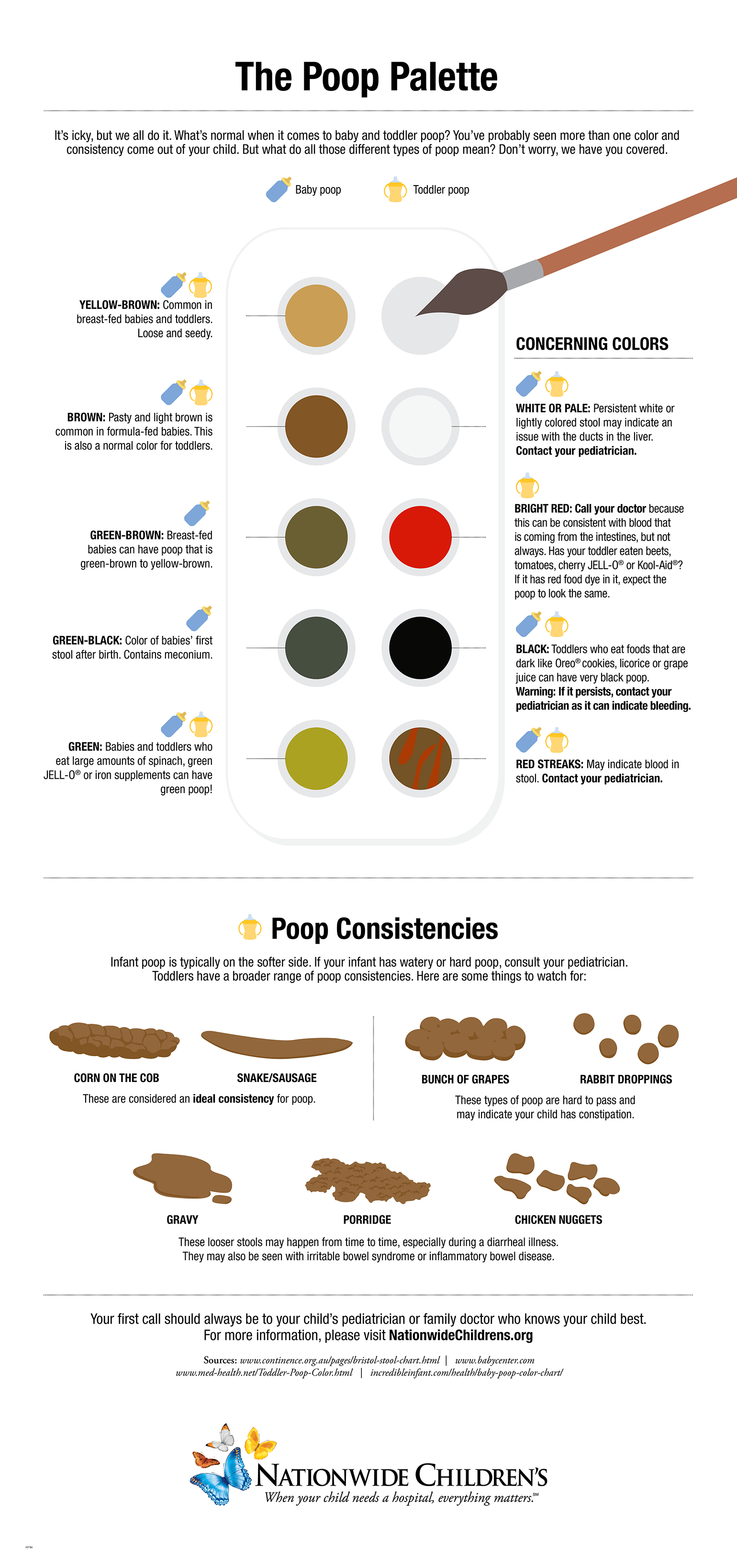
The Poop Palette: What Do All of Those Colors Mean?
Aug 17, 2026
First published April 2017
Updated August 2026
Imagine the surprise a parent feels when their child points out that their poop is pink, red, green, or even blue! While unusual stool colors can be alarming, they are often caused by foods or medications and are usually harmless. What color should stool be?
Normal stool is typically shades of brown, yellow, or green. The brown color comes from a substance called bilirubin, which is produced by the liver and released into the intestines to help digest food. As bilirubin moves through the digestive tract, it is broken down into the brown pigments that give stool its usual color.
When Stool Color Changes
Certain foods, drinks, medications, and supplements contain pigments that are not completely broken down by the body. These colors can pass through the digestive system and temporarily change the appearance of stool.
Examples include:
Red or pink stool: Beets, cranberries, red food coloring, certain candies or cereals
Green stool: Green food coloring, leafy vegetables, iron supplements
Blue or purple stool: Foods and drinks with strong artificial coloring
Black stool: Pepto-Bismol® (bismuth subsalicylate), iron supplements
Did You Know?
Some prescription medications can change stool color. For example, the antibiotic cefdinir may cause a reddish or brick-red stool, especially when taken with iron-containing products. This can be concerning to see but is generally harmless.
When Is Stool Color a Concern?
Most color changes caused by foods or medications are temporary and resolve once the substance has passed through the body.
However, you should contact your healthcare provider if your child has:
White, gray, or clay-colored stools
Red or black stools that cannot be explained by food or medication
Persistent stool color changes
Abdominal pain, vomiting, fever, jaundice, or other concerning symptoms
White or pale stools may indicate a problem with the flow of bile from the liver and should always be evaluated by a healthcare professional.
The Bottom Line
If your child has an unusual stool color but otherwise feels well, observation is often appropriate. Many stool color changes are linked to foods, drinks, vitamins, or medications and will return to normal within a few days. Be sure to tell your child's healthcare provider about all medications, vitamins, and supplements your child is taking, as this information can help avoid unnecessary testing and worry.
Remember: Strange stool colors are often more surprising than serious! When in doubt, take a picture and contact your pediatrician for guidance. For more information on Nationwide Children's Gastroenterology, Hepatology and Nutrition Resources, click here.
Rajitha D. Venkatesh, MD, MPH, FAAP, is an attending pediatric gastroenterologist at Nationwide Children’s Hospital and Co-Director of the Eosinophilic GI Disorders Program. She is also an assistant professor of Clinical Pediatrics at The Ohio State University College of Medicine. Dr. Venkatesh attended Wilkes University for her undergraduate education as a Wilkes Scholar. She attended SUNY Upstate Medical University for medical school and was selected as a NIH Fogarty Clinical Scholar. She completed residency training in Pediatrics at Yale-New Haven Children Hospital, and fellowship training in Gastroenterology, Hepatology & Nutrition at Massachusetts General Hospital for Children (MGHfC).
All Topics
Browse by Author
About this Blog
Pediatric News You Can Use From America’s Largest Pediatric Hospital and Research Center
700 Children’s® features the most current pediatric health care information and research from our pediatric experts – physicians and specialists who have seen it all. Many of them are parents and bring a special understanding to what our patients and families experience. If you have a child – or care for a child – 700 Children’s was created especially for you.