Vaginal Discharge

As you get older, you may notice a discharge from your vagina between menstrual periods. It is normal to have some vaginal discharge. The amount, color and thickness of this discharge are different for each person.
Treating Vaginal Discharge
The specialty of Pediatric and Adolescent Gynecology expertly cares for children with vaginal discharge.
Normal vaginal discharge:
- Is thin, clear, white or slightly yellow in color
- Often increases 2 weeks before menstruation
- May change or increase with some birth control methods
- Has no bad odor
- Does not cause itchiness or irritation
Normal vaginal discharge is made up of a liquid (mucus) and bacteria. The mucus helps to clean the vagina. There is both good and bad bacteria in the mucus. The good bacteria keep everything in balance. Small amounts of yeast may also be present. Bacteria help yeast from growing out of control, too. When one kind of bacteria grows too much, you may have an infection.
After intercourse you may notice a musky odor. If the odor lasts more than a day, it may mean that you have an infection.
Signs of Infection
A vaginal discharge alone does not mean there is an infection. If you have any of these other signs or you have unprotected sex (sex without a condom), you should see your health care provider.
- Vaginal itching, burning or irritation
- Thick, white vaginal discharge
- A change in what the discharge usually looks like
- Bad odor that lasts more than a day
- Painful intercourse
- Painful urination
- Pain or tenderness in your lower abdomen (tummy)
- Blisters, bumps or sores in your genital area
Treatment
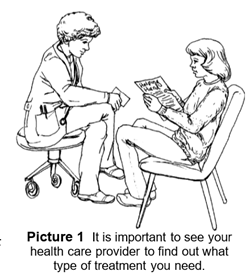
Each infection has its own treatment. Most vaginal infections are not serious and can be cured with prescription medicine. If not treated, your symptoms may get worse or put you at risk for future problems.
Sexually transmitted infections (STDs) can be more difficult to treat and are easily spread to others. That is why it is important to see your health care provider to know what to do (Picture 1).
All women who are sexually active need to see their health care provider at least once a year.
How to Prevent Vaginal Infections
Even if you are careful, vaginal infections can occur. You can reduce your chance of infection by doing the following:
Cleanliness and Hygiene
- Take a shower or bath regularly using a plain, mild soap or just water. Do not use bubble bath.
- Avoid using vaginal sprays and scented products.
- Use plain white toilet tissue.
- After using the bathroom, always wipe from front to back.
- Wash and dry your hands before touching the vaginal area.
- After intercourse, try to urinate to help prevent a urinary tract infection.
Tampons, Sanitary Pads and Liners
- Use unscented tampons, sanitary pads and liners.
- Change often, at least every 2 to 3 hours.
- Remove the tampon before going to bed and wear a pad instead.
Douching
Do not douche unless your health care provider tells you to. These products do not prevent or treat infections. Instead, they can kill the good bacteria, change the balance of organisms in your vagina, irritate the skin or cause vaginal infections.
Clothing
- Wear cotton or cotton-lined underpants. Cotton absorbs moisture. It keeps you cooler and drier. Synthetics can trap moisture and cause irritation.
- Avoid tight-fitting leggings, tights and pants. They do not let air move.
- Avoid sitting around in damp or sweaty clothing.
Lifestyle
A healthy lifestyle helps you fight infections.
- Eat healthy, exercise regularly and get enough sleep.
- If your health care provider thinks your weight may be causing infections, they will tell you what to do.
- Limit the number of sexual partners. Use condoms during intercourse to help prevent sexually transmitted infections.
If You Have a Vaginal Infection
- Take all the medicine as prescribed. If you stop taking the medicine before the infection is completely cured, the infection may return.
- If the doctor prescribes a vaginal cream, do not use tampons while you are using the cream. The tampons will absorb the cream.
- Do not have intercourse until your treatment is finished and you have no more signs of infection.
- If your doctor says the infection can be spread through intercourse, tell your partner. This is very important because your partner may also need treatment.
When to Call Your Health Care Provider
Call your health care provider (phone) at _______________________ or Adolescent Health at (614) 722-2450 if any of the following occurs:
- You have finished your medicine and you still have symptoms of vaginal infection.
- You have a fever.
- You have any pain.
HH-I-119 ©1998, Revised 2020, Nationwide Children’s Hospital