
Blood Transfusion

People who will be having a blood transfusion often have questions (Picture 1). Here are some answers to the questions asked most often about blood transfusion and donation.
How Does a Transfusion Help?
A transfusion of red blood cells carries oxygen to the tissues and can relieve symptoms of anemia. White blood cells may help the body to fight infection. Platelets, plasma and certain other factors help decrease or stop bleeding.
Who Supplies the Blood for Transfusion?
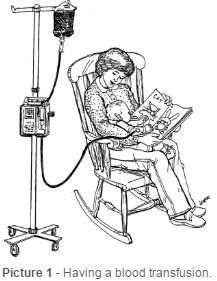
The blood used at Nationwide Children’s Hospital comes from the American Red Cross. The Red Cross uses only volunteer donors. They do not pay donors for their blood. In addition to the general blood supply, the Red Cross also has programs that allow advance donation of the patient's own blood or the donation of blood by a relative or friend. These two programs are explained briefly on page 2.
What Steps Are Taken to Make Sure Donated Blood Is Safe?
Volunteer blood donors are asked about their health and risk factors for disease. If they are not well or if they have risk factors for disease, they are not allowed to donate. The donated blood is carefully tested for hepatitis, syphilis and the AIDS virus before it is sent to Nationwide Children’s Hospital. These steps assure any blood transfused at Nationwide Children’s Hospital is as safe as it can be.
The risk of getting AIDS or any other blood disease from a blood transfusion has received much attention. It is important to know that since early 1985, all donated blood has been tested for the AIDS virus and blood-borne diseases, so any risk is greatly reduced.
Are There Any Side Effects from a Blood Transfusion?
- With most transfusions there are no side effects. Some patients may have a mild reaction, either during or after the transfusion. The most common reactions include hives, rash, itching, fever or chills.
- Rarely, patients may have shortness of breath, chest or back pain or nausea. If your child has any of these symptoms, tell a doctor or nurse right away.
- For information on the frequency of side effects see bottom of page.
How Is Blood Transfused?
Blood is collected and stored in sterile plastic bags. These bags are used only once and then thrown away. Before the blood is transfused, it is tested and matched with your child's blood to make sure the safest blood is used.
- The nurse will check your child's wristband and carefully match it with the name and number on the transfusion bag.
- At the start of the transfusion and during the procedure, a nurse will check your child's pulse, blood pressure and respirations.
- The blood flows through a filter and plastic tubing attached to a needle or catheter placed in your child's vein or in a central venous catheter.
- The transfusion takes several hours.
Will Blood Be Available When My Child Needs It?
The American Red Cross works hard to make sure there will be blood available for patients who need it. It is important that healthy people donate blood so that there is an adequate supply. Millions of lives are saved each year because people donate blood.
What Is an Autologous Transfusion?
Most transfusions are done using volunteer donor blood. Patients may sometimes use their own blood for transfusion. An autologous (aw-TAWL-uh-gus) blood transfusion uses blood the patient has donated for himself or herself before having surgery. One or more units of blood are drawn from the patient and stored until the operation. Receiving your own blood is the safest method of transfusion. Benefits of an autologous transfusion include: reduced risk of side effects or infection from the transfusion and less blood needed from volunteer donors.
Depending on your child's general health, blood counts, weight and the reason for the blood transfusion, he or she might be a candidate for this procedure. Your child must weigh at least 110 lbs to be allowed to donate. Ask your child's doctor if you want to learn more about your child donating for himself.
What Is a Directed Donation?
A directed donation is blood donated for your child by a family member or friend. The donation process and the testing of the blood are exactly the same as for all other blood received from the American Red Cross. Directed donations are no more or less safe than blood from the volunteer donor supply.
What Else Can Be Done?
There may also be other ways to help your child without a transfusion of blood products. Certain growth factors, steroids and anti-clotting agents can sometimes be used. Other methods include IV fluids or “bloodless” surgical techniques.
Your child's doctor or nurse will answer any other questions you may have. The doctor will fully explain the reasons for a transfusion if your child needs one during his hospital stay.
| Name of Infection | Estimated Risk |
| Syphilis, malaria, any bacterial infection | Rare |
| HIV infection | One in 1.9 million |
| Hepatitis A | Rare |
| Hepatitis C | One in 1.8 million |
| Hepatitis B | One in 205,000 |
| HTLV infection (a type of viral infection) | Rare |
| West Nile virus | Rare |
Potential adverse reactions seen with blood transfusion
| TYPE OF BLOOD PRODUCT | RATE OF OCCURRENCE | ||
| Very Rare (less than 0.1%) | Rare (1%) | Occasional (1-2%) | |
| Red Blood Cells - carry oxygen to the tissues | Bacterial infection (2 per one million products) Red or bloody urine | Chest or back pain | Fever, redness, rash, itching, nausea |
| Platelets - help the blood to clot | Bacterial infection | Chest or back pain | Fever, redness, rash, itching |
| White Blood Cells - help fight infection | Bacterial infection | Wheezing/trouble breathing | Fever, redness, rash, itching |
| Plasma/Plasma Products - mostly water, along with proteins that fight infections and help the blood to clot | Trouble breathing | Fever, chills, headache, nausea, itching, feeling tired | |
HH-II-122 6/93, Revised 7/06 Copyright 1993-2006, Nationwide Children’s Hospital